Veterinary Products
Bring Technology to Your life
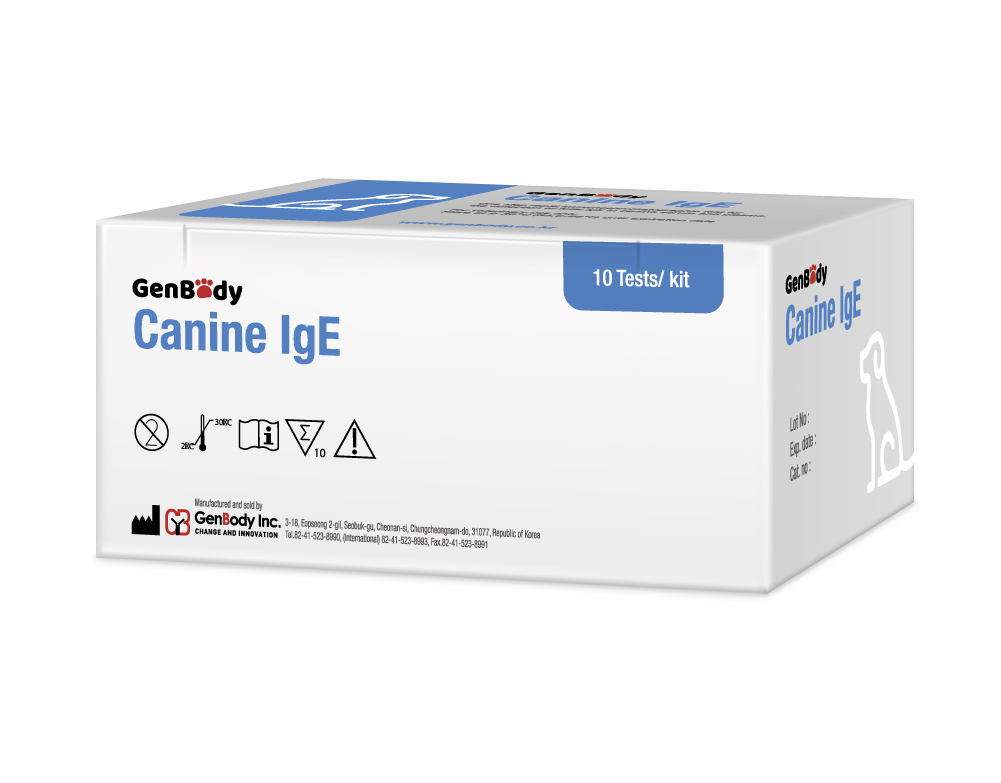
Canine IgE
Rapid test for the detection of Canine IgE in canine serum and plasma
- Product features
-
- Getting results In 10 minutes
- Simple and easy to use
- Optimized for Point of Care with a small diagnostic kit
- No need to use extra reader
- High diagnostic accuracy
- Economical and capable of mass testing
Specification
Specimen Serum and plasma Diagnostic target Canine Immunoglobulin E (IgE) Shelf life 24 M The immune response, which normally protects the dog against infection and disease, can actually be harmful to the body. The immune reactions involved in allergies are quite complex. Most reactions involve an antibody in the blood called “Immunoglobulin E (IgE)”. In an allergic reaction the allergen protein molecules combine with IgE antibody molecules and attach to a type of cell called “mast cell”, found in many tissues throughout the body. When these cells are attached to the allergen, they break up and release potent chemicals such as histamines that cause local inflammation (redness, welling and itching). This inflammation cause the various signs associated with an allergic reaction. Therefore, Canine IgE titers are very important for health prediction in dog.