Human Products
Bring Technology to Your life
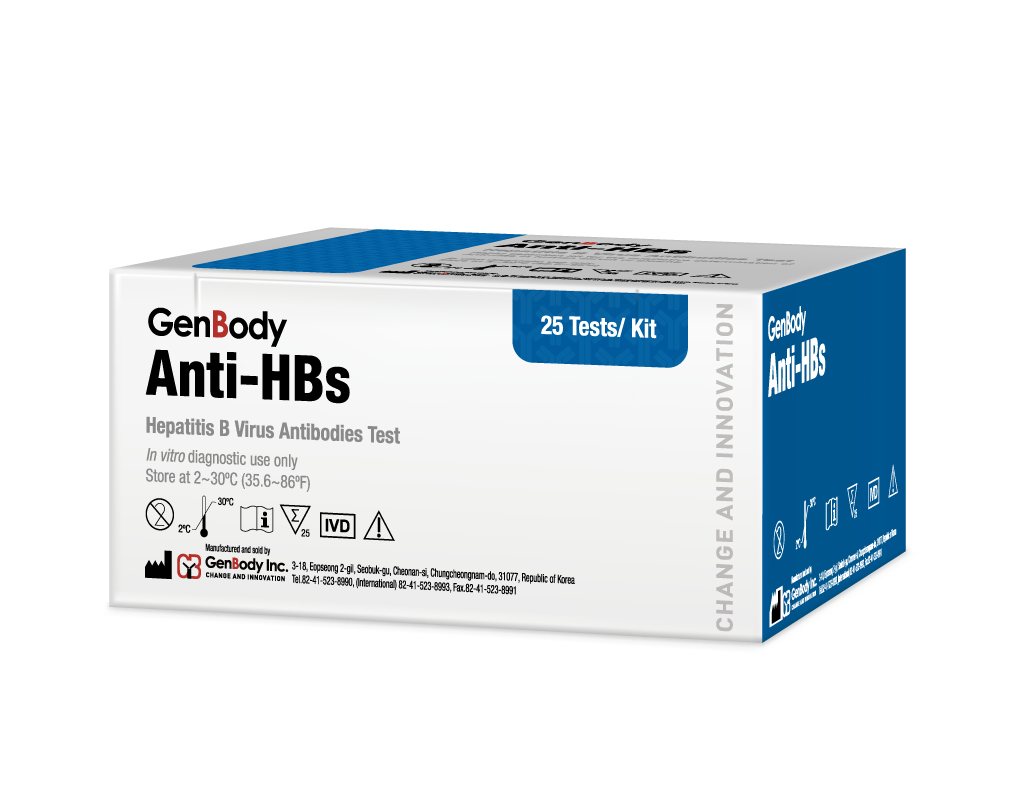
Anti-HBs
Immunochromatographic test for the qualitative detection of antibodies specific to Hepatitis B in Human serum or plasma
- Product features
-
- MFDS approval
- Getting results In 20 minutes
- Simple and easy to use
- Optimized for Point of Care with a small diagnostic kit
- No need to use extra reader
- High diagnostic accuracy
- Economical and capable of mass testing
Specification
Specimen Serum, Plasma Specimen volume 100㎕ Test time 15~20 minutes Storage temperature 2-30℃ Expiration date Refer to label for expiration date Hepatitis B refers to a disease in which inflammation of the liver occurs due to the body's immune response when infected with the hepatitis B virus (HBV). Symptoms include fatigue, loss of appetite, nausea, and vomiting. Muscle pain and mild fever may occur, the color of urine may become darker, or in severe cases, jaundice may occur where the skin or eyes turn yellow. In fatal cases, it can even lead to death. Hepatitis B is transmitted through body fluids such as blood infected with the hepatitis B virus. A baby can be transmitted from a mother with hepatitis B at birth (vertical transmission), and can also be infected through sexual contact, blood transfusion, or reuse of a contaminated syringe. After the hepatitis B virus enters the blood through this route, it mainly settles in the liver cells. Our body mounts an immune response to eliminate this virus, which destroys the liver cells infected with the virus and causes inflammation in the liver.