Human Products
Bring Technology to Your life
cTnI
immunochromatographic test for the qualitative determination of cardiac troponin I in human whole blood, serum and plasma
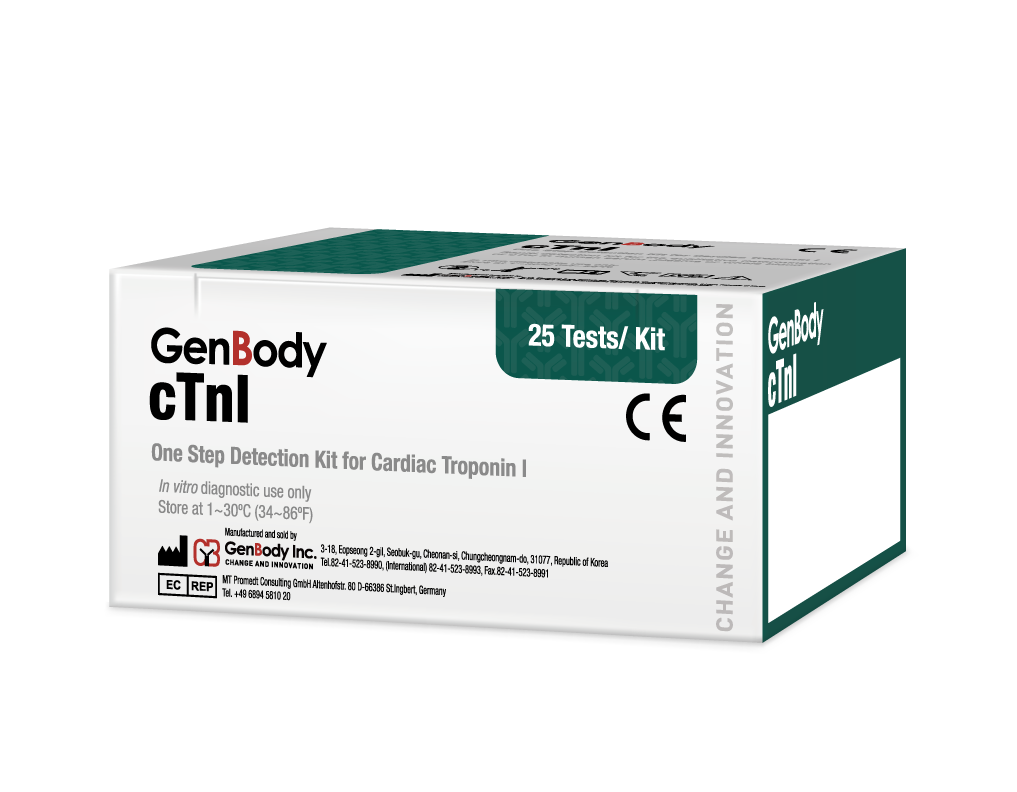
- Product features
-
- MFDS approval
- CE mark
- Getting results In 20 minutes
- Simple and easy to use
- Optimized for Point of Care with a small diagnostic kit
- No need to use extra reader
- High diagnostic accuracy
- Economical and capable of mass testing
Specification
Specimen serum, plasma and whole blood Specimen volume 120㎕ Test time 15~20 minutes Storage temperature 1-30℃ Expiration date Refer to label for expiration date Cardiac myofibrils are composed of actin, myosin, tropomyocin, and troponin complex. Troponin complex is a contractile protein of striated muscles that, along with tropomyosin, regulates muscle contraction. It is composed of three subunits, troponin T (TnT), troponin I (TnI), and troponin C (TnC), which have different components and functions. It is barely detectable in the blood of normal people, but when the cell membrane is damaged, it is released into the blood and rises significantly. Because there is a difference in amino acid composition between troponin in myocardium and skeletal muscle, it can be distinguished immunologically, so it is a specific test marker for myocardial damage. Troponin I (TnI) is leaked into the blood from the beginning of myocardial damage and is useful as an early diagnostic indicator. Additionally, compared to other enzymes and markers, TnI shows abnormally high concentrations over a long period of time, so it is useful not only for early diagnosis but also when time has elapsed after infarction. There is a possibility that blood levels may increase even in very small infarctions that do not cause any subjective symptoms or appear on an electrocardiogram.