Human Products
Bring Technology to Your life
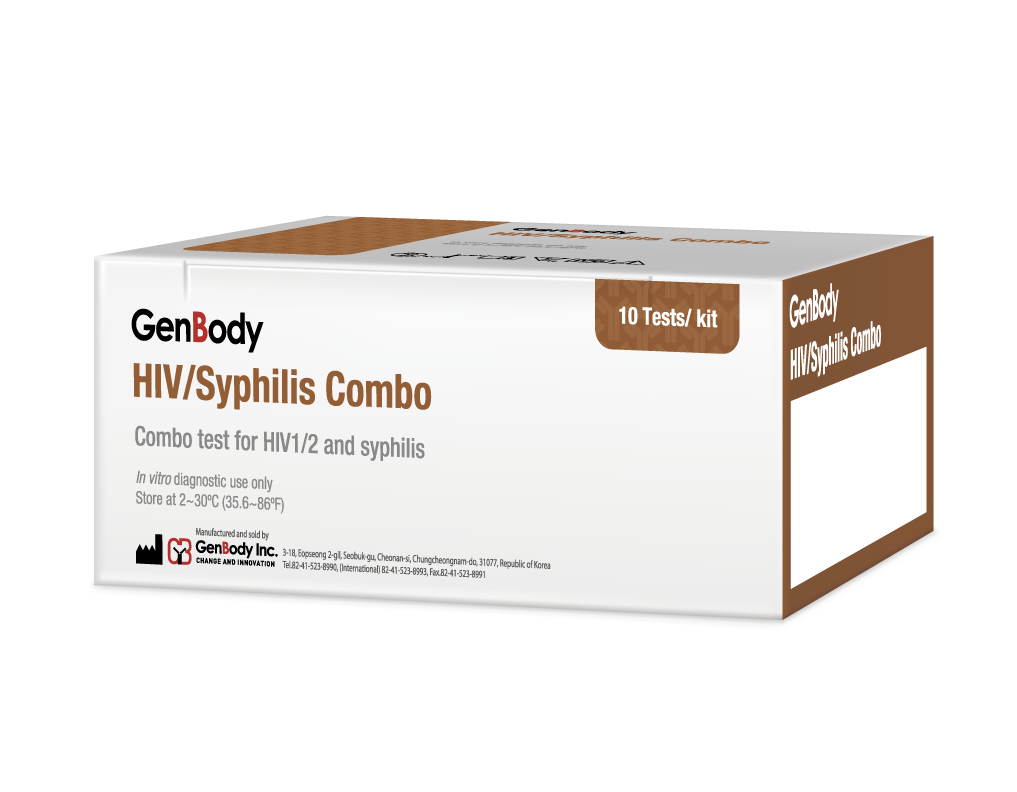
HIV/Syphilis Combo
Chromatographic immunoassay kit for rapid and qualitative detection of antibodies against HIV and Syphilis in human blood
- Product features
-
- Getting results In 20 minutes
- Simple and easy to use
- Optimized for Point of Care with a small diagnostic kit
- No need to use extra reader
- High diagnostic accuracy
- Economical and capable of mass testing
- Getting results In 20 minutes
Specification
Specimen Serum, Plasma, Whole blood Specimen volume Serum, Plasma : 10㎕, Whole blood : 20㎕ Test time 5~20 minutes Storage temperature 2-30℃ Expiration date Refer to label for expiration date HIV stands for human immunodeficiency virus (HIV). AIDS refers to acquired immunodeficiency syndrome (AIDS), which occurs when immune cells are destroyed due to HIV infection and immune function declines, resulting in opportunistic infections. In short, HIV is the virus that causes AIDS. Infection with this virus is commonly referred to as HIV or HIV infection. The routes of HIV infection include sexual contact, transmission through blood transfusions or blood products, accidental transmission such as needle sticks by hospital workers, and transmission from mother to newborn. In the past, when diagnostic methods for HIV were not developed, transmission through blood transfusions actually occurred, but recently, with the advancement of diagnostic methods, such transmission through blood transfusions has become extremely rare. In our country, it is mainly transmitted through sexual contact and intravenous drug use.
Syphilis is an infectious disease spread through sexual contact. If you are infected with syphilis and receive appropriate treatment, all syphilis bacteria in your body will disappear. However, if not adequately treated, latent syphilis may remain. Additional treatment may be needed to prevent latent syphilis from progressing to neurosyphilis. Syphilis is an infectious disease spread through sexual contact. If you are infected with syphilis and receive appropriate treatment, all syphilis bacteria in your body will disappear. However, if not adequately treated, latent syphilis may remain. Additional treatment may be needed to prevent latent syphilis from progressing to neurosyphilis. When Treponema pallidium spreads through the genitals, painless sores form around the genitals. This is primary syphilis. Primary syphilis gets better without treatment. However, if Treponema pallidum spreads throughout the body through the blood, secondary syphilis, such as a rash, occurs. Secondary syphilis also improves without treatment. Secondary syphilis can progress to tertiary syphilis, or latent syphilis can remain asymptomatic for years or decades and then manifest as arteritis and cranial nerve syphilis, which are forms of tertiary syphilis.